Operation breakdown · hours as ranges
How long will this
take me
Almost nobody abandons a garment because they sewed it badly. They abandon it because they thought it was a weekend, and the collar alone was the weekend. Here is the whole thing, broken into operations, with the hours on each.
- Straightforward
- Needs attention
- Fiddly
You have finished a handful of garments.

13 pieces cut. 15 operations.
Every operation, in words(15)
| Time | Operation | Difficulty | Can stop after |
|---|---|---|---|
| 45–80 min | Cut and mark all pieces | Straightforward | Yes |
| 20–45 min | Fuse interfacing to collar, stand, cuffs and placket | Straightforward | Yes |
| 35–60 min | Make the front plackets | Needs attention | Yes |
| 30–55 min | Attach the back yoke | Needs attention | Yes |
| 40–70 min | Sew and turn the collar | Needs attention | Yes |
| 30–55 min | Join the collar to its stand | Fiddly | Yes |
| 35–60 min | Attach the collar unit to the neckline | Fiddly | Yes |
| 40–75 min | Set the sleeves | Needs attention | Yes |
| 40–75 min | Make the sleeve plackets | Fiddly | Yes |
| 45–85 min | Sew and finish the side and underarm seams | Needs attention | Yes |
| 35–60 min | Attach the cuffs | Needs attention | Yes |
| 15–40 min | Hem the shirt | Straightforward | Yes |
| 30–55 min | Work the buttonholes | Needs attention | No |
| 15–40 min | Sew on the buttons | Straightforward | Yes |
| 15–30 min | Final press | Straightforward | Yes |
- Evening 11.75–3 h
- Cut and mark all pieces
- Fuse interfacing to collar, stand, cuffs and placket
- Make the front plackets
Ends with make the front plackets finished.
- Evening 21.5–3 h
- Attach the back yoke
- Sew and turn the collar
- Join the collar to its stand
Ends with join the collar to its stand finished.
- Evening 31.25–2.25 h
- Attach the collar unit to the neckline
- Set the sleeves
Ends with set the sleeves finished.
- Evening 41.5–2.75 h
- Make the sleeve plackets
- Sew and finish the side and underarm seams
Ends with sew and finish the side and underarm seams finished.
- Evening 51.5–3.25 h
- Attach the cuffs
- Hem the shirt
- Work the buttonholes
- Sew on the buttons
Ends with sew on the buttons finished.
- Evening 615–30 min
- Final press
Ends with final press finished.
Move either dial. Nothing here needs an account.
This answers one question, and stops
Handtime tells you how long a garment takes. It does not teach sewing, it publishes no tutorials, and it recommends no course, no pattern, no machine and no tool. It has no commercial relationship with anyone who sells those things. It does not quote for having the garment made for you, and it will never suggest you buy one instead.
That is a limit held on purpose. There is a great deal of instruction available and very little honest arithmetic, and the moment a service starts explaining how to set a sleeve, the question of how many evenings it takes disappears underneath the explanation.
- No method instructions
- No course or pattern recommendations
- No equipment or brand suggestions
- No quotes for having it made
- No promise of a completion time
- No figure given as a single number
How it works
 01
01Show the garment
A photograph of the thing you want to make, or a line drawing from a pattern envelope. The structure is what matters — whether it is lined, how it opens, what the sleeve and collar are.
 02
02Say where you are
One sentence. How much you have made before, and how long you get in one sitting. Nothing about your measurements and nothing about your budget.
 03
03Take the rule
The operations with a range on each, the totals at three levels of experience, the step people stall on, the first-time cost on its own line, and the whole thing cut into evenings that end where something is finished.
The same shirt, three times
A single figure has nothing to compare itself to. Three of them give you the span, and the span is what tells you whether you are looking at a fortnight or a season. None of these three is the right one to be.
First time
You have not made this kind of garment before.
15–27 h
Plus 5–10.5 h of reading, testing and unpicking, counted separately.
A few projects
You have finished a handful of garments.
8–14.5 h
Plus 5–10.5 h for any of these operations you have not done before.
Regularly
You sew often and rarely stop to work something out.
5–9 h
Plus 5–10.5 h for any of these operations you have not done before.
Same garment, same operations, three readings. Nobody has to decide which column is the right one to be in — the span between them is what the estimate is actually telling you.
Setting a sleeve, and setting a sleeve for the first time
Underestimating a garment is almost never a matter of sewing each seam a little slowly. It is the looking-up, the scrap seam, and the taking-out — and those hours belong to the operation you have never done, not to the garment.
What an hour of it leaves behind.
- + 20–55 min
Make the front plackets
Working out which way the folds go before committing to a topstitch line.
- + 20–50 min
Attach the back yoke
Reading the enclosed-seam method through twice and sewing a scrap version.
- + 30–70 min
Sew and turn the collar
Getting the two points to come out the same shape, which usually takes one attempt that gets unpicked.
- + 40–85 min
Join the collar to its stand
Understanding how the stand wraps the collar before sewing it, then re-doing the first side.
- + 45–100 min
Attach the collar unit to the neckline
Easing a curve to a curve, checking, and taking part of it out again.
- + 35–75 min
Set the sleeves
Distributing the ease evenly, which is rarely right on the first pass.
- + 50–110 min
Make the sleeve plackets
Following an unfamiliar folding sequence, usually with a full practice placket first.
- + 15–45 min
Attach the cuffs
Fitting the gathered sleeve into a fixed cuff length.
- + 30–60 min
Work the buttonholes
Setting the machine up and testing on scrap until the length and density are right.
This figure is kept out of the totals on purpose. It is not sewing time and it does not repeat: the second garment of the same kind does not carry it. Adding it in would make the totals wrong for everyone who has done these operations before, and leaving it out of the plan entirely is what makes the first garment take twice as long as expected.
The step people stall on
35–60 min
Attach the collar unit to the neckline
The collar stand meets the neckline on a curve, and both layers have to end up the same length at the same place. It is the point where a small error at the cutting stage becomes visible.
It is on the rule at the same scale as everything else. Knowing which part of an evening it occupies is more useful than knowing that it is difficult.
What an operation looks like
These are results, not instructions. Each one is a line on the rule and a row in the table, and knowing which part of an evening it occupies is more useful than being told it is difficult.
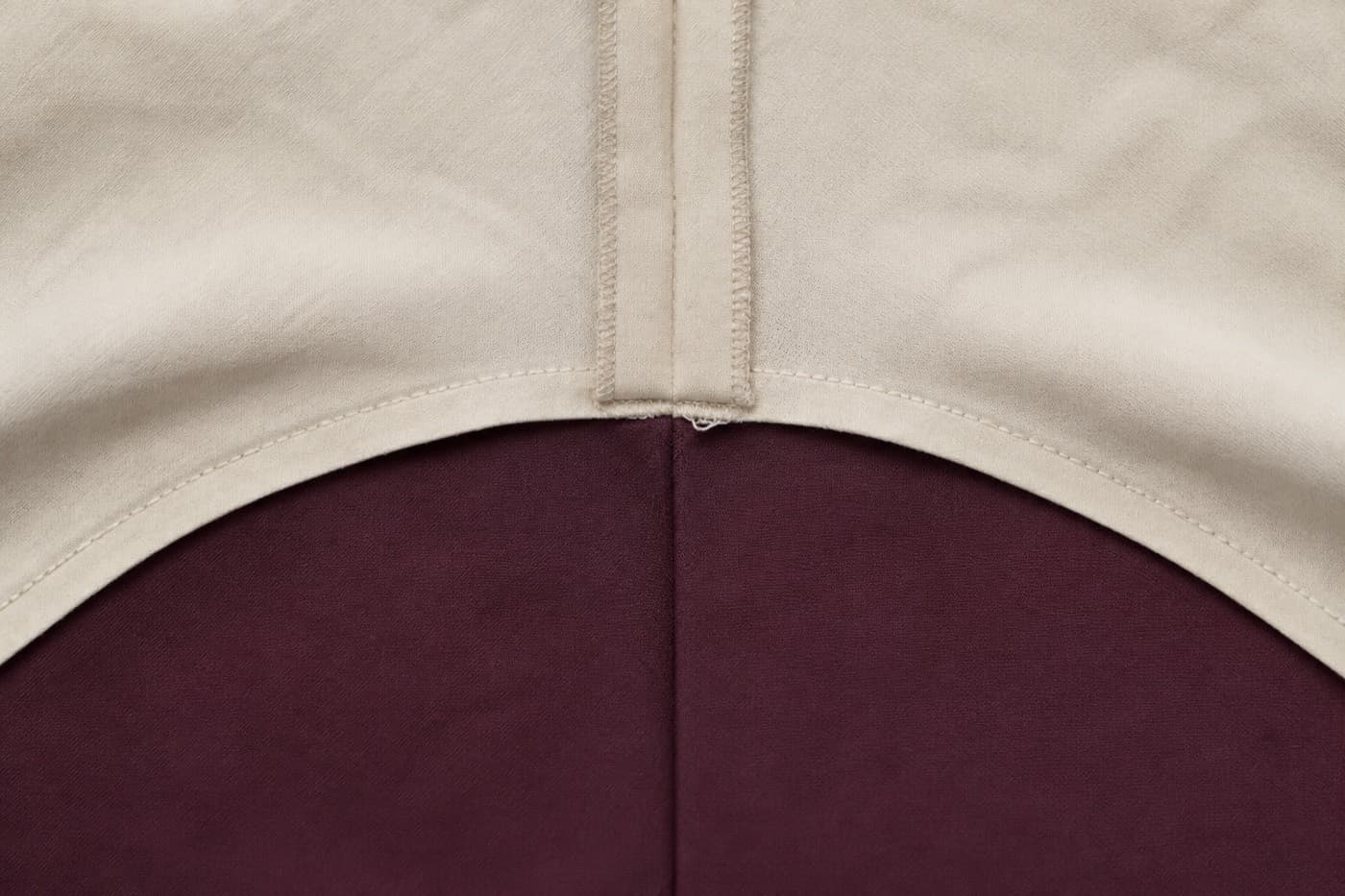
Setting a sleeve
Needs attentionThe cap is longer than the armhole it goes into, and the extra has to disappear evenly rather than in a pleat.
Collar to stand
FiddlyTwo curved pieces meet along a line that is visible from both sides once it is done.
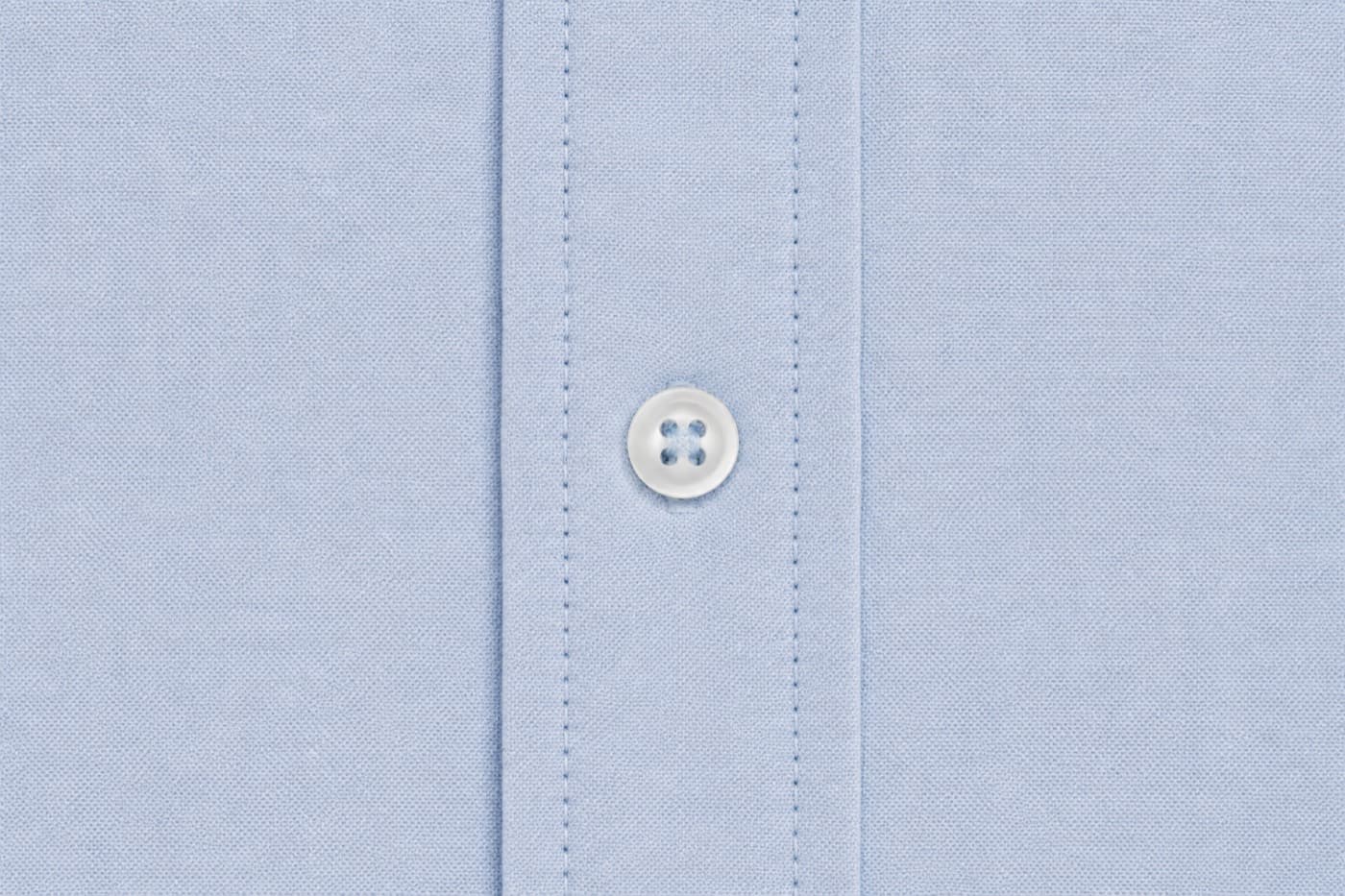
Front placket
Needs attentionTwo topstitch lines that run the whole length of the garment, where any wander is permanent.
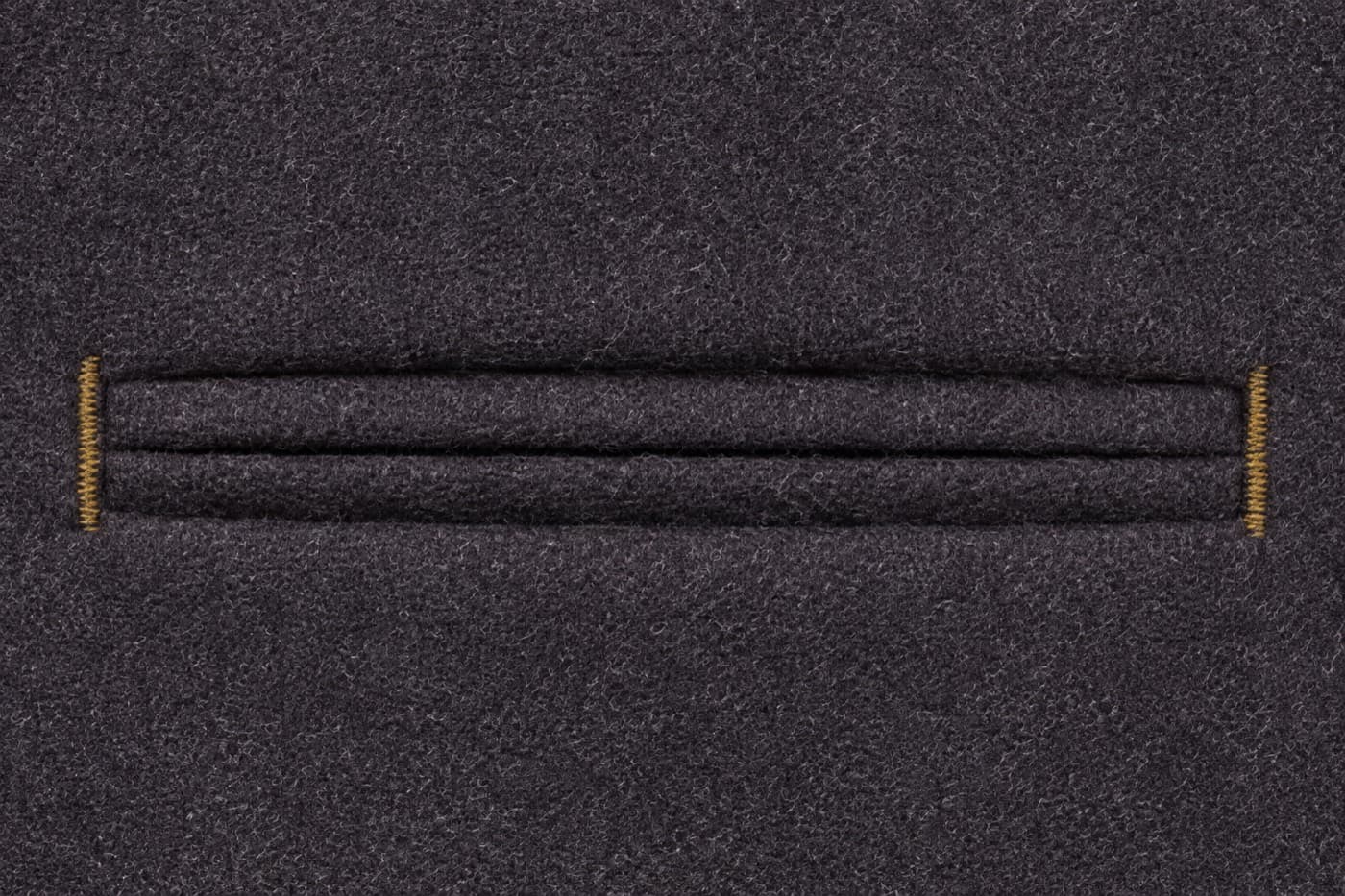
Welt pocket
FiddlyCut into the front before anything can be checked, and the two lips have to close along one straight line.
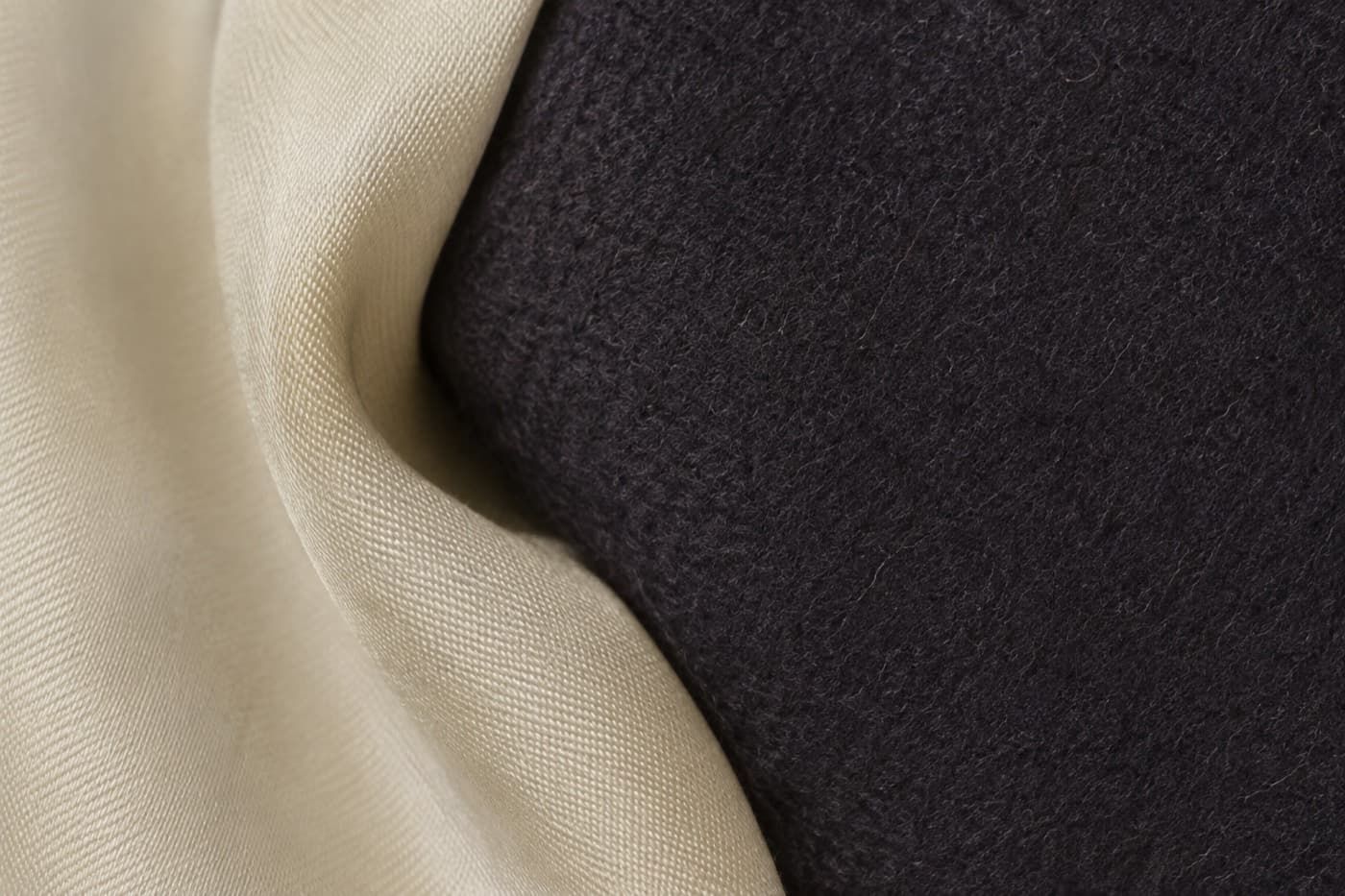
Lining edge
FiddlyA slippery fabric joined to a stable one, where the ease has to sit inside rather than pull the outside.
Buttonholes
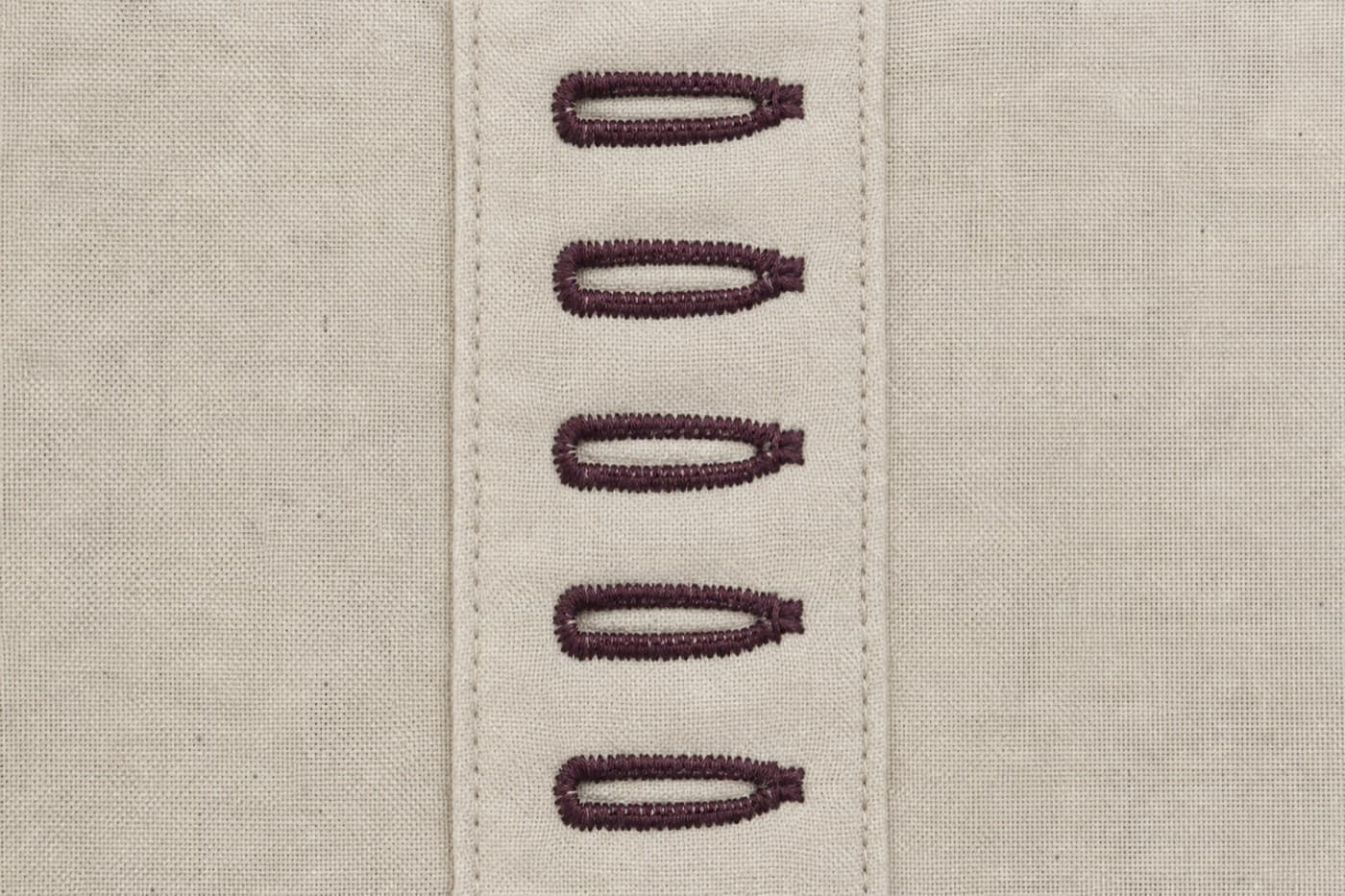
Needs attentionQuick once the machine is set. Setting the machine is the part that takes the time.
An evening ends where something is finished
The number of evenings is not the total divided by the length of an evening. A sitting has to end somewhere the work can be put down — a collar made, a sleeve set, a hem closed — because the garments that never get finished are the ones that were left with a sleeve half attached.
So the split is made at the last stopping point that fits inside the time you have. When nothing fits, the plan says so and names the next place you can actually stop, rather than pretending the evening was long enough.
A fold is a place the cloth can be put down. So is the end of a sleeve.
Eight garments, drawn to one scale
Every bar below is on the same hours-per-pixel. A skirt is three pieces and a coat is twenty-one, and the difference between them is not a matter of degree.
Button-down shirt
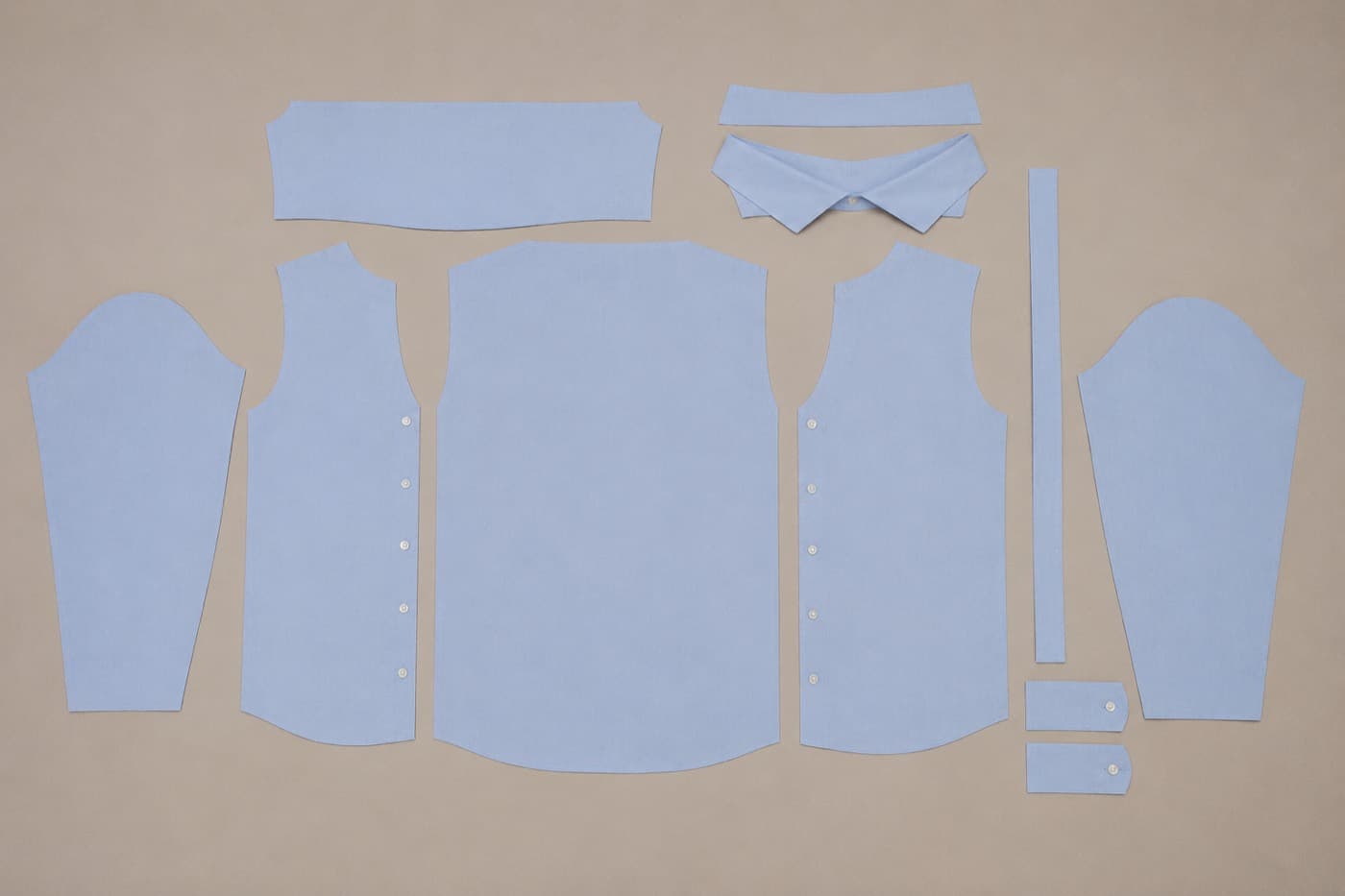
13 pcs15–27 h8–14.5 h5–9 h+ 5–10.5 h15 operations. Stops available after 14.
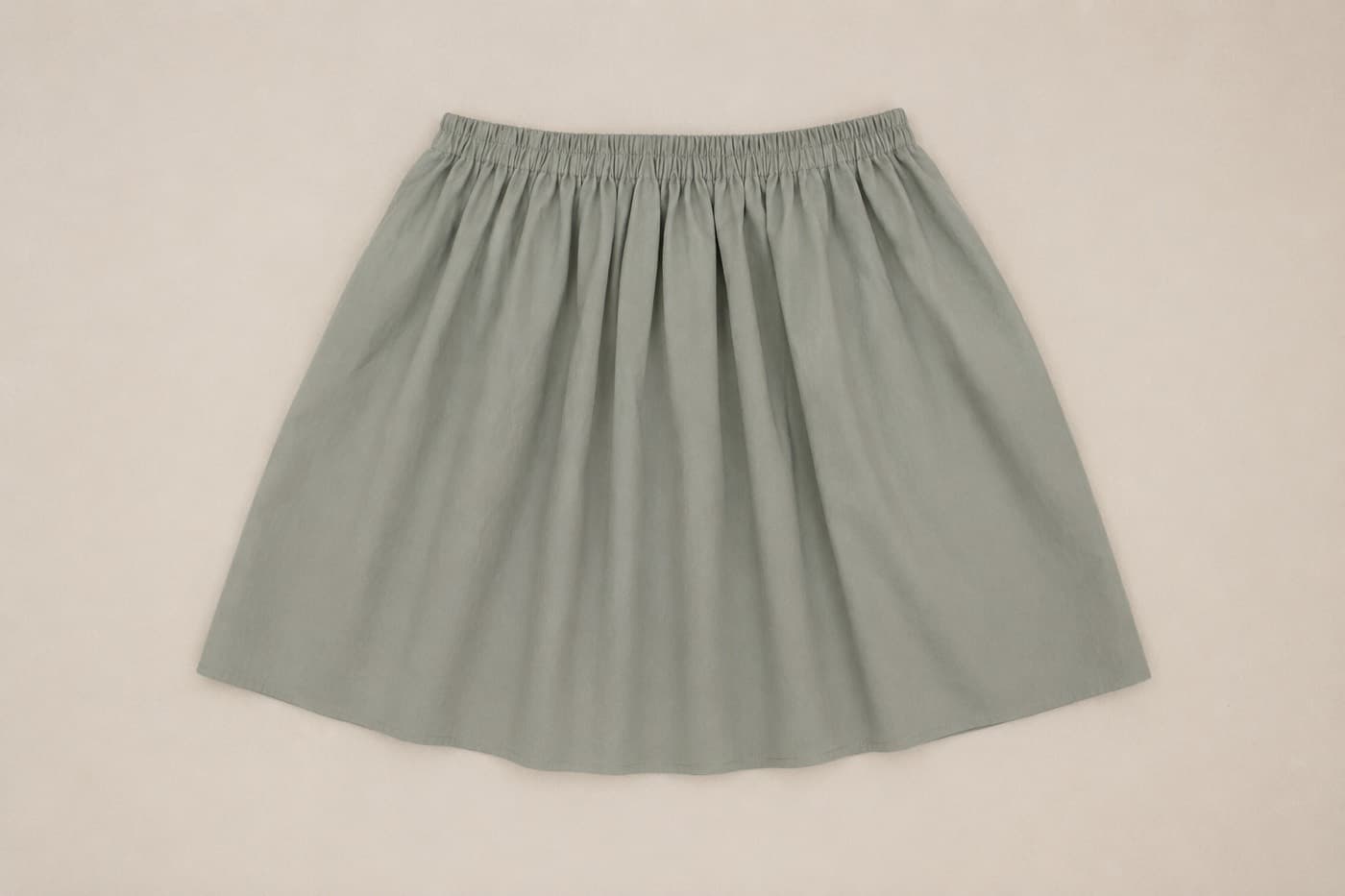
Elastic-waist skirt
3 pcs3–6.5 h1.75–3.5 h1–2.25 h+ 15–40 min6 operations. Stops available after 6.
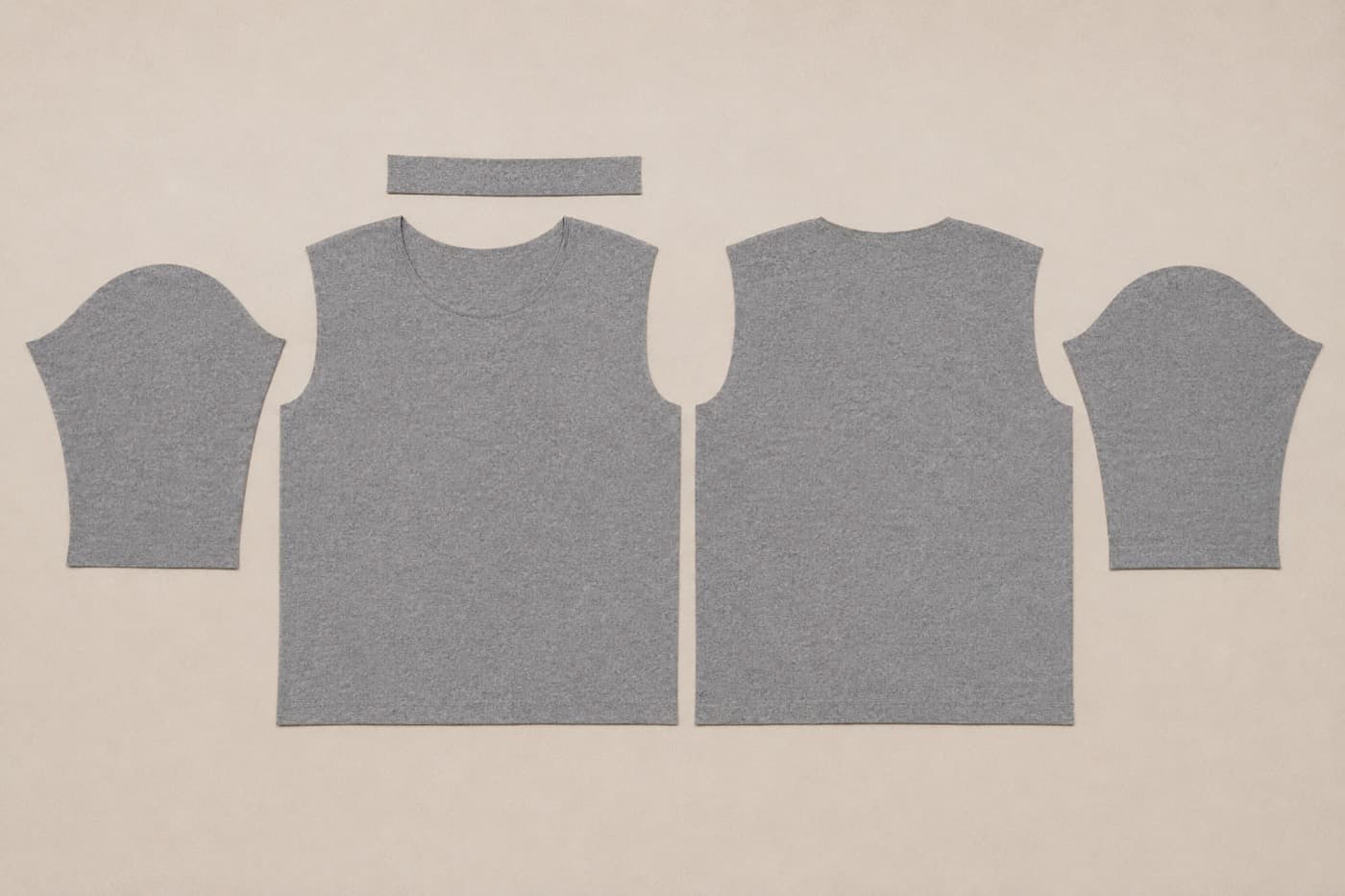
Knit t-shirt
5 pcs3.5–8 h2–4.25 h1.25–2.75 h+ 1–2 h7 operations. Stops available after 7.
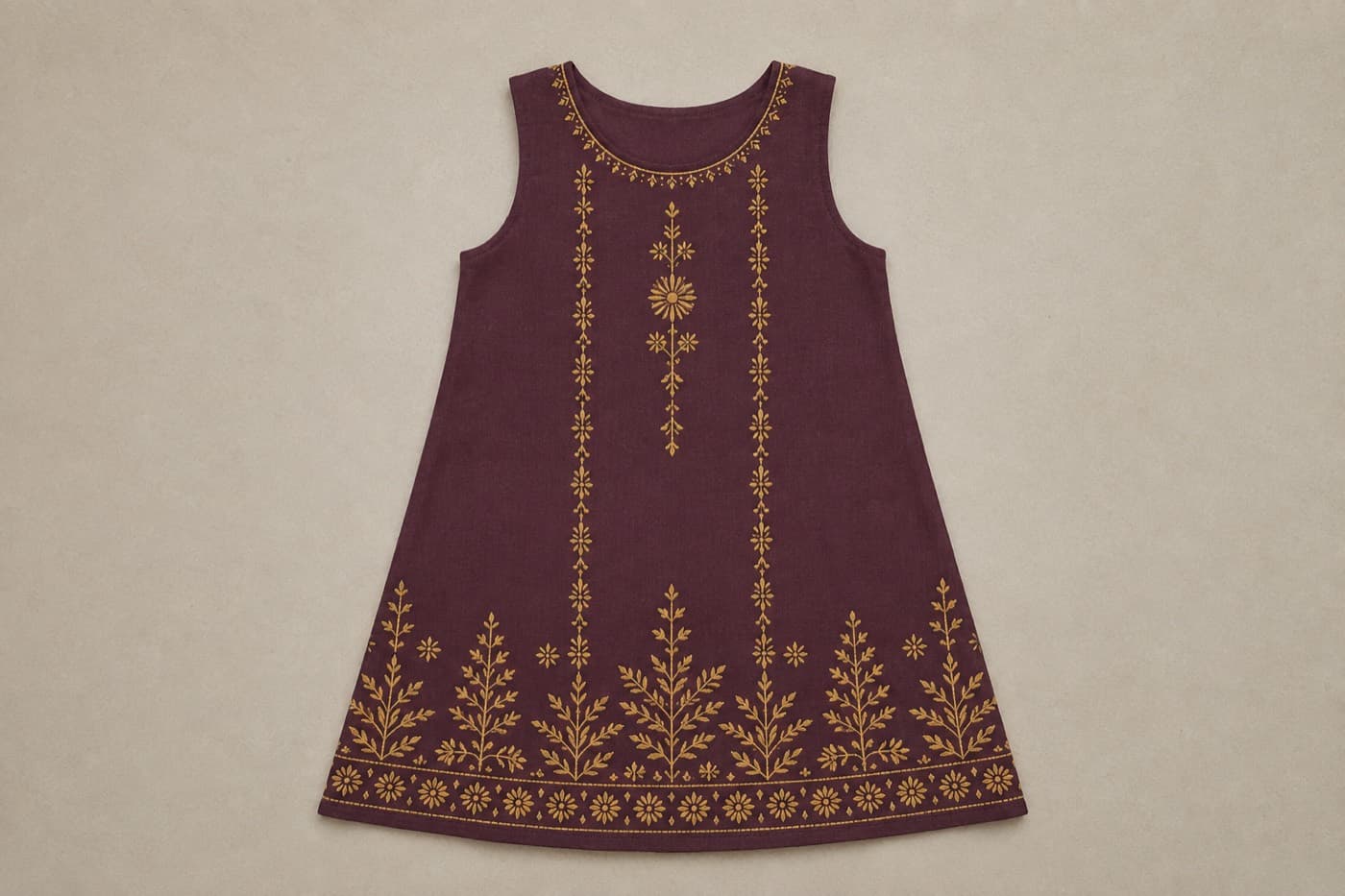
A-line dress
9 pcs7–14 h4–7.5 h2.25–4.5 h+ 1.5–3.25 h9 operations. Stops available after 9.
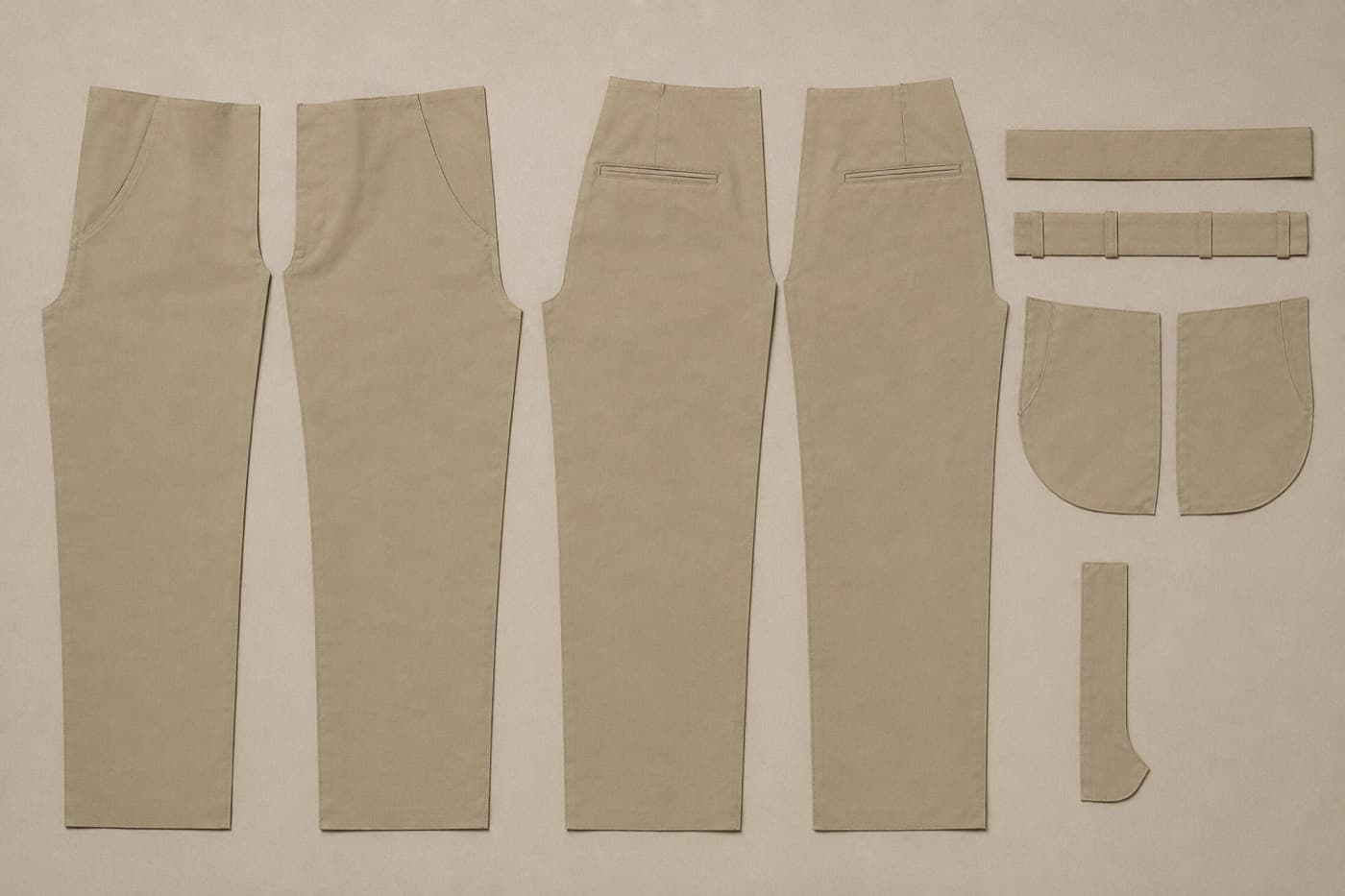
Tailored trousers
11 pcs10.5–19 h5.5–10 h3.5–6.5 h+ 2–4.5 h10 operations. Stops available after 10.
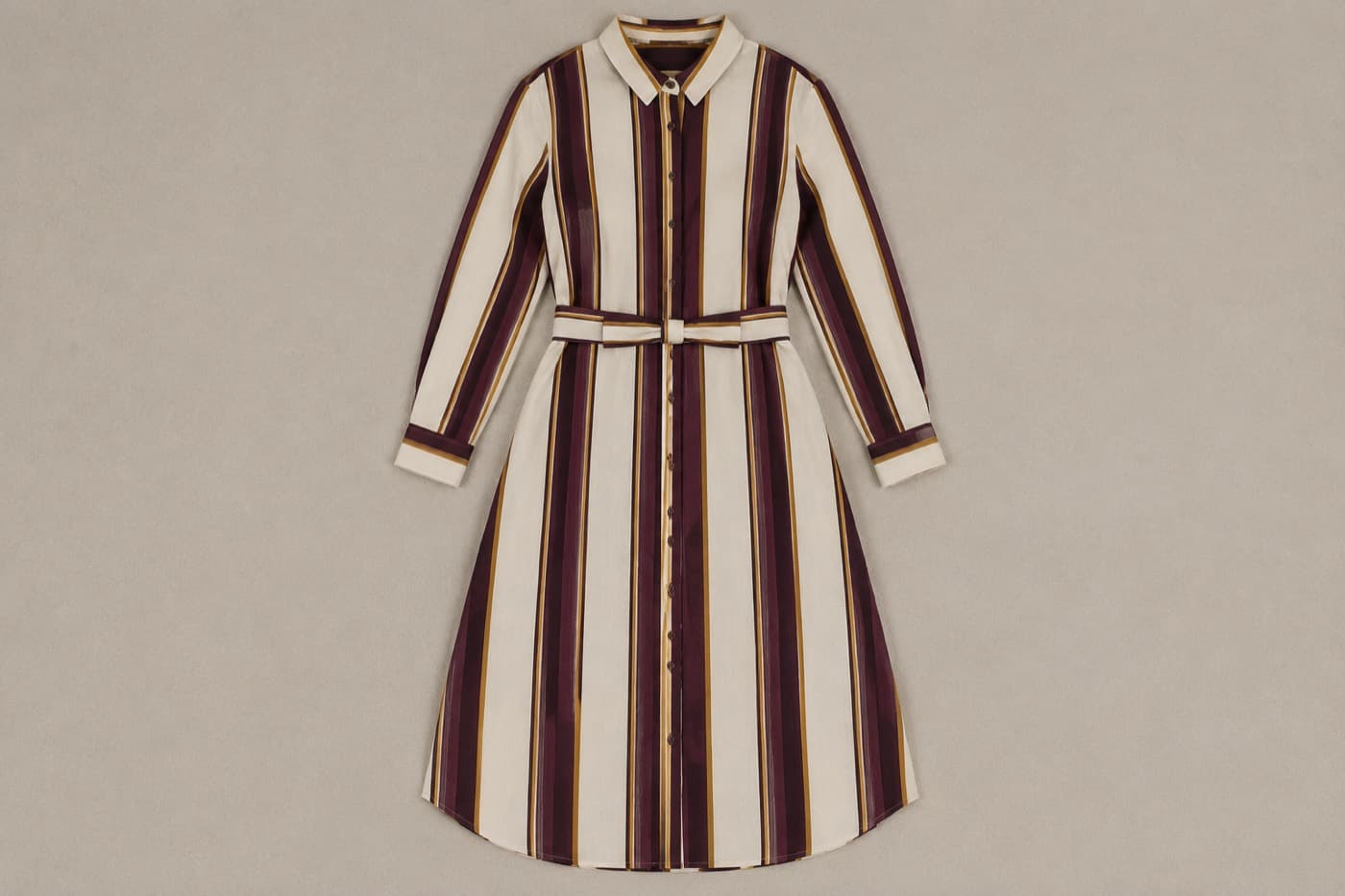
Shirt dress
16 pcs17–29 h9–16 h5.5–10 h+ 3.5–8 h14 operations. Stops available after 13.
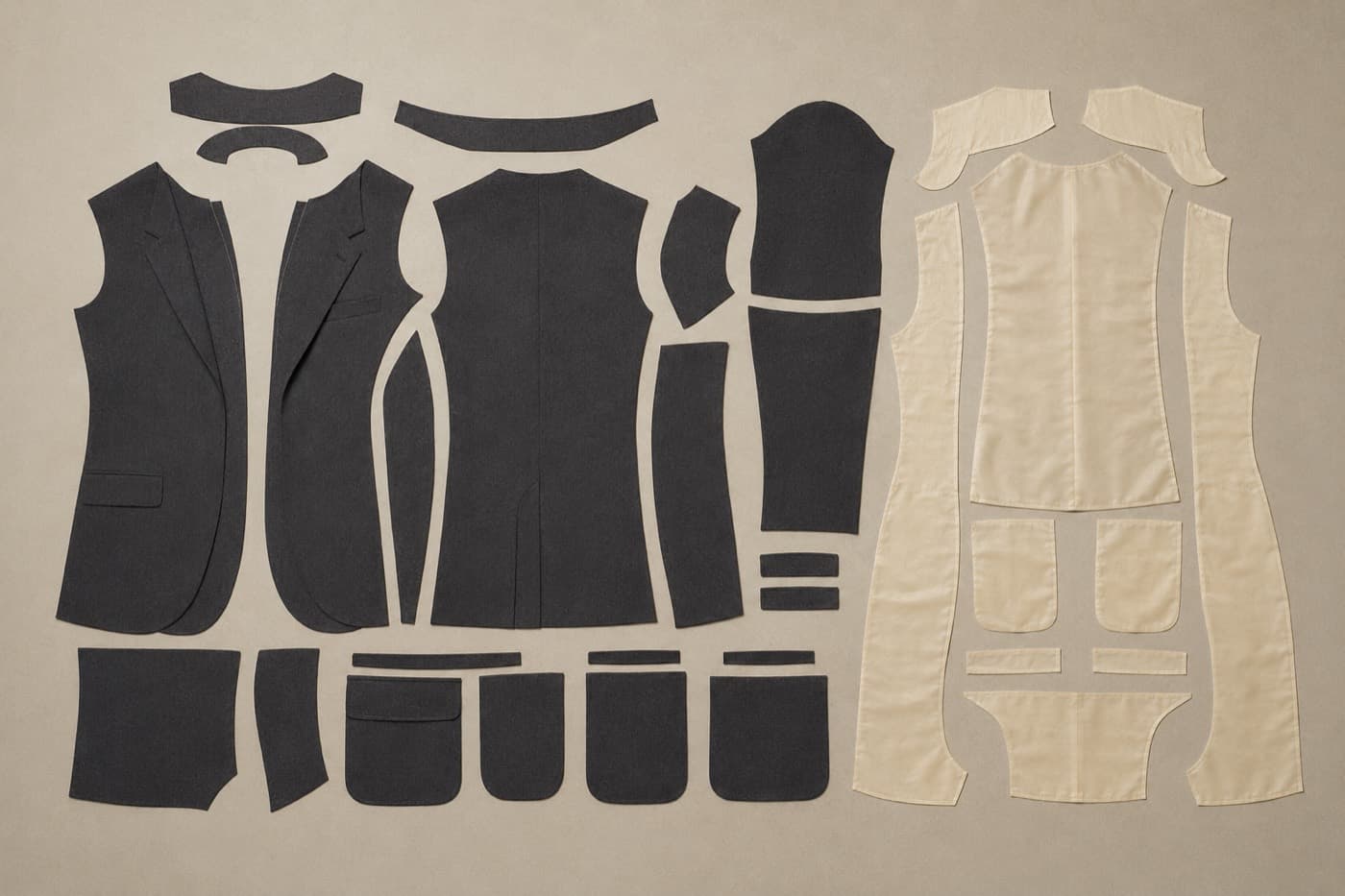
Lined blazer
27 pcs24–43 h13–24 h8–14.5 h+ 7.5–16 h16 operations. Stops available after 15.
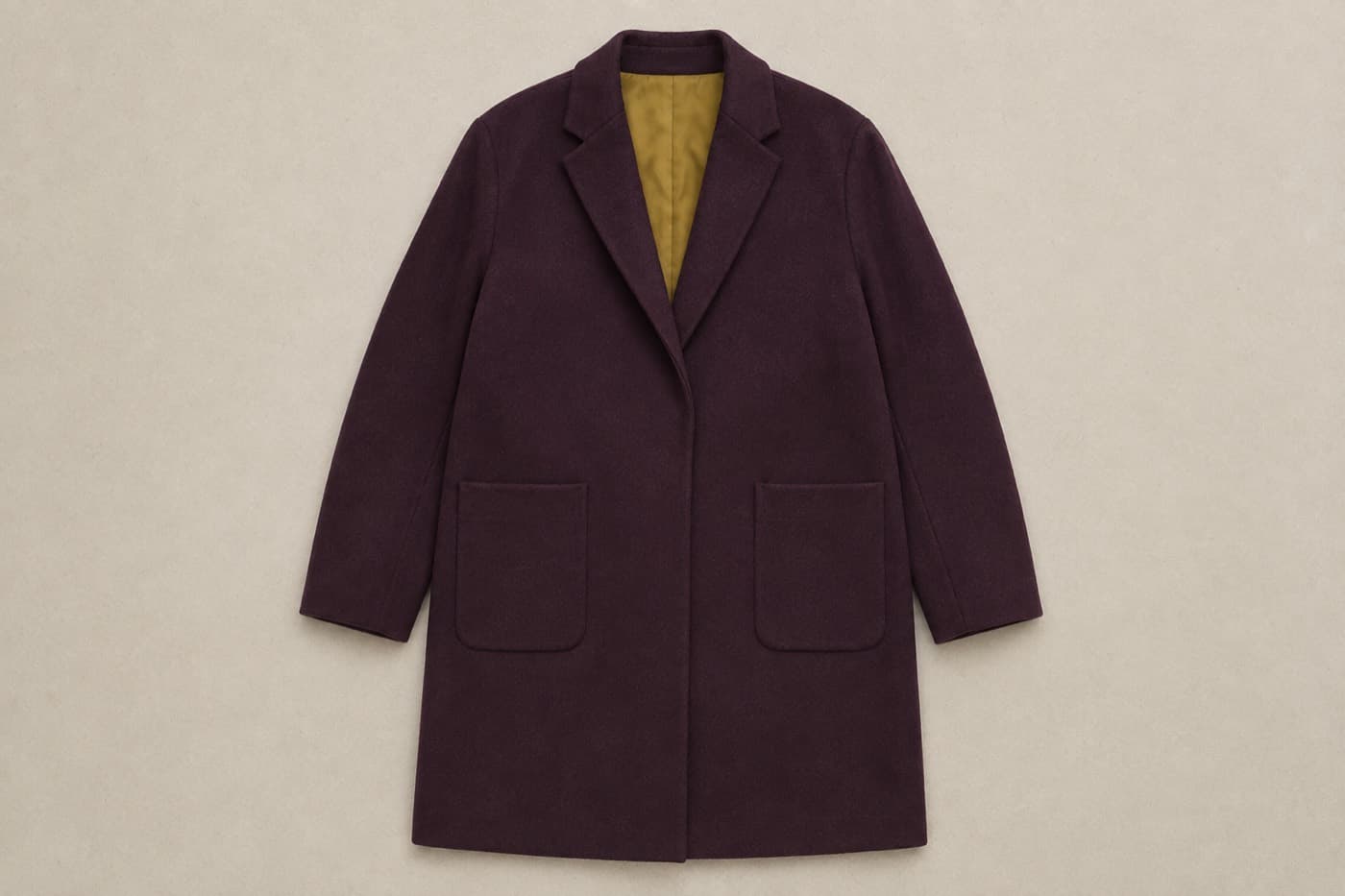
Unstructured coat
21 pcs21–36 h11–19.5 h6.5–12 h+ 4–8.5 h13 operations. Stops available after 13.
What this cannot know
- How the fabric behaves. Chiffon, a loose knit and a stable cotton are not the same job, and the difference can be several times over, not a few percent.
- What equipment you have. Whether seam finishing takes one pass or three depends on the machines in the room, and this service does not know what is in yours.
- Your own pace. Two people at the same level of experience routinely differ by half again, and neither of them is doing anything wrong.
- How often you are interrupted. Time at the machine and time in the evening are not the same measurement.
- Whether the pattern fits you as drafted. Any adjustment happens before the operations below and is not counted in them.
Three plans
Three garments a month, at one skill level. The three levels side by side, and the session plan, are on the paid tiers. The first-time cost and the list of things the estimate cannot know are never behind the paywall, and the watermark never covers them.
Free
USD $0
No card required.
Three garments a month, at one skill level.
Evening
USD $8 per month
All prices include IVA at the Portuguese standard rate of 23%.
All three skill levels on one screen, and the work split across the evenings you actually have.
Shift
USD $24 per month
All prices include IVA at the Portuguese standard rate of 23%.
Keep a file per garment, record what it actually took, and have the next estimate corrected against your own times.
Questions
Do you teach me how to make it?
No. This service answers one question — how long a garment takes — and nothing else.
There are no tutorials here, no method instructions, no courses, no pattern recommendations and no suggestions about machines, feet, needles or any other equipment. There is no commercial relationship with any brand or retailer in the field.
That is a deliberate limit rather than a gap. The moment a service starts explaining how to sew, the question of how long it takes disappears underneath the teaching, and that question is the one nobody answers.
I'm much slower than your figures. Am I doing something wrong?
No. The estimate is a reference, not a standard, and being outside it is not evidence of anything.
Fabric, equipment and interruptions all move the result materially, and none of them is known to this service. Two people at the same level of experience routinely differ by half again on the same garment.
If you are on the Shift plan you can record what an operation actually took and have later estimates use your own times instead of the table's.
Where do the hours come from?
From a written table of operations kept in this service, not from a model. A garment factory plans production by breaking a garment into operations and giving each one a standard time; the table here is the home-sewing equivalent, written by hand.
The image model has one job: look at the reference photograph and decide which garment family it belongs to and which optional operations are present — lining or not, cuffs or not, pockets or not. It never produces a number.
That is why the same garment at the same level always returns the same figures.
Why is every figure a range?
Because a single number would be false. The width of the range is part of the answer.
Every operation carries a range, the total carries a range, and the first-time cost carries a range. Nothing on this site promises a completion time, and no figure anywhere is presented as a single value.
What happens to the photograph I upload?
It is used to read the structure of the garment and to produce your estimate, and for nothing else.
Uploads are not used to train models. They are kept for as long as the file they belong to is kept — 30 days on the free tier, and for the life of the subscription on Shift — and you can delete any file, and your whole account, from the workspace at any time. Deletion removes the images.
The full detail is in the Política de Privacidade, which also sets out the right to complain to the CNPD.
How do subscriptions, allowances and cancellation work?
Three plans, billed monthly or yearly. No credit packs, no top-ups and no stored balance of any kind. There is no trial, so nothing turns into a charge later.
Paid plans renew automatically at the end of each period, at the same amount, until you cancel. The amount, the period and the date of the next charge are all shown before you confirm, and the charge appears on your statement as HANDTIME.
An allowance is an allowance to use the service in the period it belongs to. It is not money, it is not stored value, it is not refundable and it cannot be transferred, and it does not carry over to the next period.
You can cancel at any time from the billing screen — the same number of steps it took to subscribe. Prices include IVA at 23% and are shown in USD; the amount, the period and the next charge date are all shown before you confirm.
Refunds and the right of withdrawal
Consumers in Portugal and the EU have 14 days to withdraw from a distance contract. Because this is a digital service, that right ends early only if you have expressly asked for the service to start inside those 14 days AND separately acknowledged that doing so ends the right — two separate boxes, neither of them pre-ticked, both repeated in your order confirmation.
If either box is not ticked, the 14 days run in full. The statutory withdrawal form and the full conditions are on the Direito de Livre Resolução page.
Is there an age limit?
Yes. The service is offered to adults. Accounts must be opened by someone aged 18 or over, and this is stated at sign-up and in the Termos de Utilização.
Something went wrong. Who do I talk to?
Write to support@ajaconfeccoes.shop or call +351 965 678 904. Both reach a person.
Consumers may also use the Portuguese electronic complaints book, which is linked in the footer of every page of this site and which we must answer within 15 working days. The Resolução de Litígios page sets out the alternative dispute resolution route and the competent authority.
Find out before the fabric is cut
Three garments a month, free, with the first-time cost and the limits of the estimate included at every tier.